
DON’T FORGET TO ENTER THE SCOUTING CONTEST!
Send me a photo/screenshot of the best youth player you’ve found! If you can, get the photo while they’re still in the academy so we can see their potential range, but if you want to promote them so we can see their OVR then feel free. To enter, just send the photo to the FIFA Scouting Tips Facebook or Twitter page, or leave a link in the comments here or on the YouTube page. A week from today (3rd October) I’ll choose the winner and post it at the start of a video and on social media!
Key points:
- Don’t loan your players out if you will give them plenty of game time and get them into good form
- It doesn’t matter where you loan your players out, as long as they’re not in the same league
- Goalkeepers start growing properly around age 22-23, but can grow earlier
- Physical stats take a long time to get growing and growth appears to be very haphazard
- The loan glitch still works and you can use it to quickly boost your players’ potential
Welcome to the FIFA 15 scouting guide!
Your essential guide to the scouting system in FIFA 15
This year I’ve decided to split the guide up into separate parts. This means that instead of having to wait until I’ve finished everything before a big all-in-one guide comes out, you’ll be getting content much more quickly. Just head over to the FIFA 15 scouting guide hub page to find the other parts as they are released.
In the final part of the guide we’re going to take a look at the best ways to develop your youth players once you’ve promoted them. Should you loan them out or keep them in your squad? If you do loan them out, where should you send them? And when will physical stats and goalkeepers start growing? Read on to find out.
Contents
Choosing whether to loan your youth players out
Once you’ve promoted your players, should you loan them out or keep them on your squad? Well, that depends on one key thing – how much game time can you give them?
If they are not yet good enough to figure regularly in your matches, send them out on loan. This will ensure they grow a decent amount and won’t complain about a lack of game time.
When you loan players out to teams that do not play in your division, they seem to grow a fairly decent amount. As far as I can tell, the game is basically working out how much they need to grow per season in order to meet their potential, and they then should roughly grow that much while out on loan. Another way of looking at it is that they seem to grow as if they were in ‘Okay’ form – enough to meet their potential, but probably not any higher.

This player had good growth while loaned out for a season
However, they will not actually be affected by form (it won’t vary) and the game does not keep a record of how many games they play. So it doesn’t matter whether you send them to Accrington Stanley or Borussia Dortmund, as long as you don’t play in the same league as these teams your player should grow about the same amount.
Yet if your players go to a team in your division then they start getting affected by form, so if you send them to a team that is threatened by relegation then they may end up being in bad form and therefore will not grow much. If you send them to a good team in your division then they may not get much game time, and thus won’t grow much either. It’s therefore a good idea not to loan them to teams in your division.
One final note on loaning – it can be very hard to loan out your youth players, regardless of how good they are. What I do is put them up for loan then save my game, then advance a week. If I’ve had no offers I reload the save and try again, saving if I get an offer. I repeat this until all my players are loaned out successfully. This can take a long time and isn’t exactly fun, but you’re guaranteed to loan your players out because you don’t continue your save until they are.

This player grew well whilst in my squad – I didn’t loan him out
But what if you feel like they are good enough to start plenty of games? If that’s the case, don’t bother loaning them out. Playing them often and getting them into good form will ensure they grow well. In fact, good form could see them growing more than they would on loan, so keep them in your squad if you plan to play them often and think you can keep them in good form.
That’s the key thing to consider. As long as you play your youth players lots and get them into good form, they should grow more than if you loan them. But if you just can’t offer them game time, loan them out – and it doesn’t matter who to, as long as they’re not in your division.
When do goalkeepers grow?
In FIFA 14 goalkeepers didn’t start growing until they were in their early to mid 20s – around 22 or 23 years old. That’s not completely true this year because keepers can start growing as soon as you promote them from the youth academy. However, this is not a guarantee, and you may find that you have several years of zero goalkeeper OVR growth.

This goalkeeper stopped growing but resumed growth at 22-23, and by 24 was growing quite well. He was still behind my outfield players, but should continue growing after they’ve stopped
In my tests, my keeper grew one OVR point when he was 18, which was a promising start given how little keepers have grown in the past. However, I then had a few seasons where he didn’t grow any OVR points, despite playing plenty of games. He finally started to grow properly when he got to 23 years old.
It’s not totally bad news though. Goalkeepers can keep growing later in their careers than outfield players, and they can still get decent OVR improvement well into their 30s.

Goalkeepers tend to starting growing later, but can keep growing well into their 30s, as this player shows
For some reason, for the first few seasons after promotion goalkeepers grow mainly in their physical stats, while their goalkeeping stats lag behind. As we shall soon see, that is often the opposite of outfield players.
When will physical stats develop?
Physical stat growth is another very haphazard – and frustrating – part of helping your youth players develop. Youth players in my tests experienced minimal physical stat growth over the course of seven or eight seasons, and there was really only one or two instances of them growing any physical stats at all.

Physical stat growth can seem very haphazard and may take a long time to start
This is not so bad if you find a winger or physically strong player, who is likely to come out of the academy with decent physical stats anyway. However, for other player types it can be a real problem and make playing games rather more difficult than it should be.
In my tests I bought a few youth players and regens from AI teams, just to compare their physical stat development with that of my own players. After a few seasons’ worth of testing and recording the results, it’s very hard to come to any solid conclusion. Some players grew in physical stats in one season but didn’t the next. Some players didn’t grow in any physical stats at all, while others grew every season.

Some young player’s physical stats can grow well
So physical stat growth seems to be a very mixed bag. It’s hard to predict whether your youth academy players will develop physically or not, and one disappointing season may give way to a more encouraging one. I know of players who have had more positive results with physically strong players – if you have found this to be the case, or have found anything else out, please share your thoughts in the comments below.
How to boost your youth players’ potentials after promotion
In my article on the importance of the May update I explained how you can boost your youth players’ potentials when you promote them. Well it doesn’t end there, because you can boost them again when they’re in your first team squad by loaning them out then instantly recalling them.
All you need to do is loan your players out, then recall them. Go to the squad report page and check their status, and you may find it has improved. Here are the statuses to look out for:
- Showing great potential: the player has potential 80-85
- An exciting prospect: the player has potential 86-90
- Has potential to be special: the player has potential 91 or higher
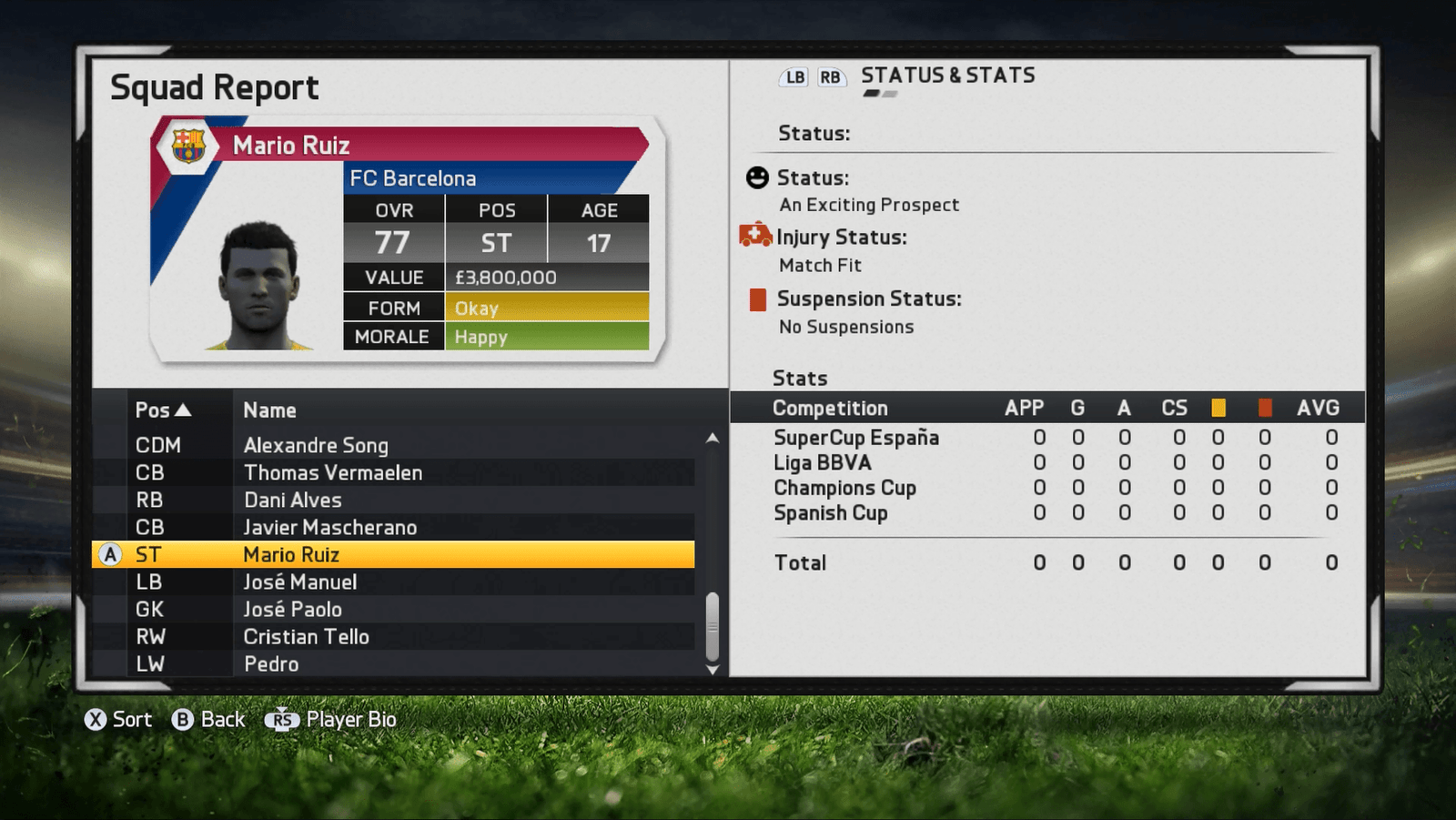
This player’s potential has gone down from “Has potential to be special” to “An exciting prospect” after being recalled from his loan
Using this method you can change your players’ statuses from “Showing great potential” all the way up to “Has potential to be special”. You can also get your player from having no potential status at all to having one of these statuses, providing they started off with potential in the late 70s.
I know some people have had difficulty getting this to work, and perhaps they were unlucky. You may find it takes several attempts to get it to work, so make sure you save before recalling them just in case their potential doesn’t change, or is not as high as you were hoping.
Resetting the growth count
If you do the above trick and recall your players from loan, you will notice that their growth count for the season resets itself. What I mean by that is that your player may say something like “75 +3” on the squad report screen, but the change to just “75” once they are recalled.
This is important because it means you can grow your players beyond the growth cap. Each season players can grow a maximum of around 5-6 points. Resetting the growth count like this means that they can grow another large amount in the second half of the season, and thereby surpass the growth cap.
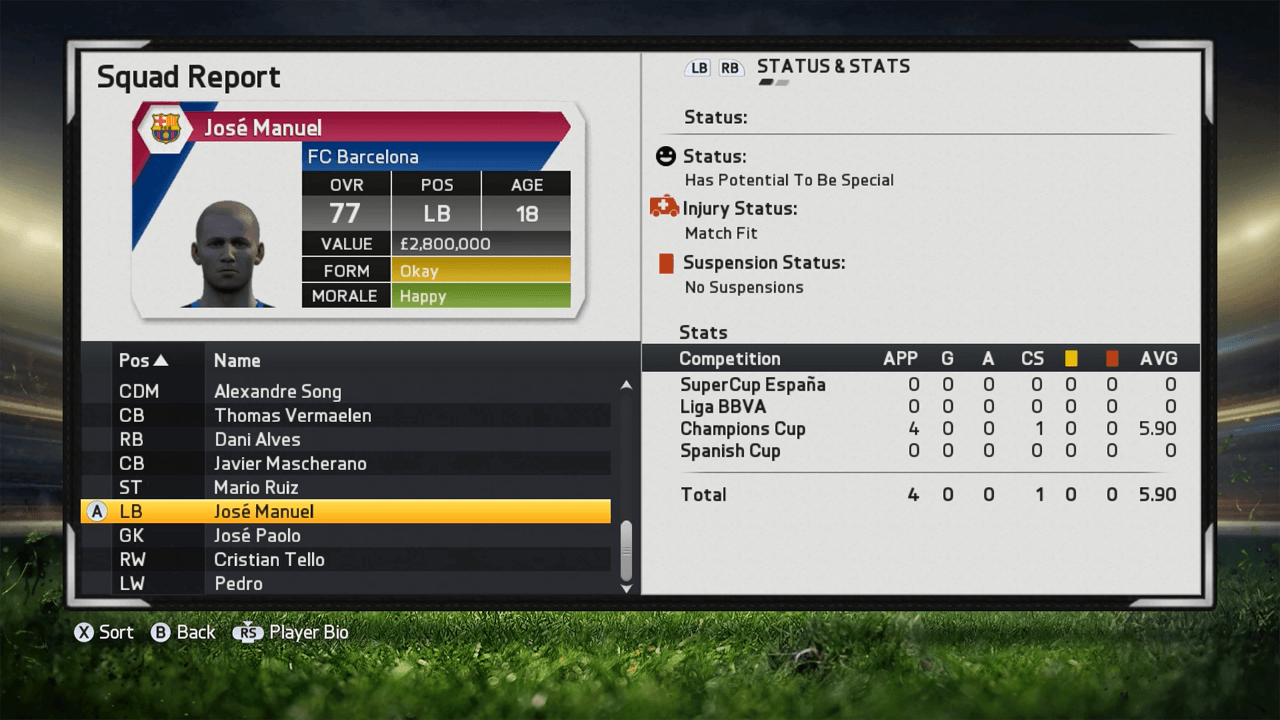
Recalling this player has kept his status the same, but his growth count has been reset. This enables more growth than would normally be possible
So your player may grow four points in the first half of the season whilst out on loan. You then recall him and the growth count is reset, and he then grows another four points in the second half of the season. Doing this in successive seasons means you can quickly grow your youth players and get them to their potentials much quicker than would normally be possible.
Thanks for reading part four of the FIFA 15 scouting guide. If you have any thoughts on this or the YouTube video, make sure you let me know in the comments below.
And don’t forget to connect with me on social media. I’ve just launched the FIFA Scouting Tips YouTube channel, and you can follow me on Facebook or Twitter for all the latest updates.